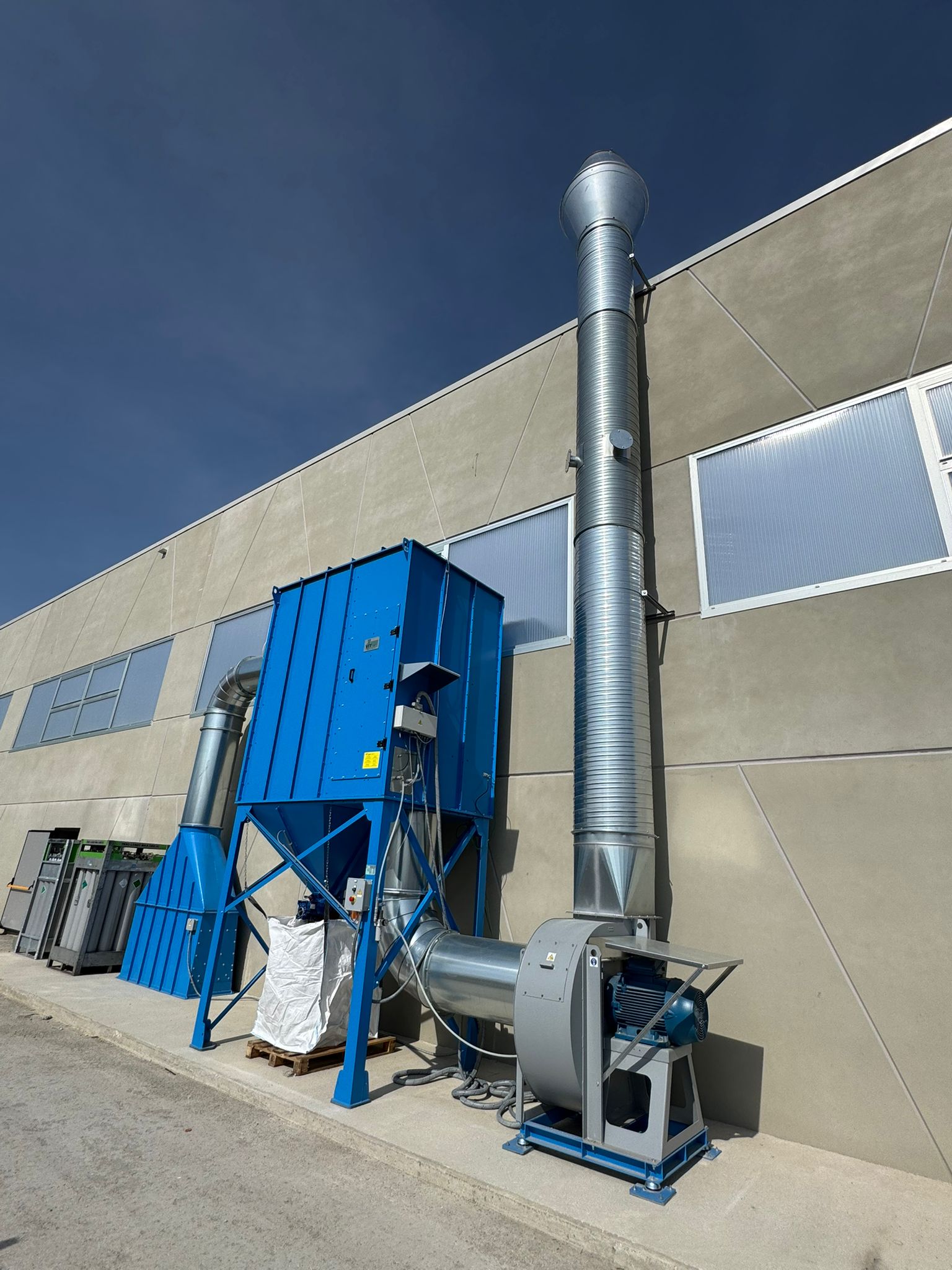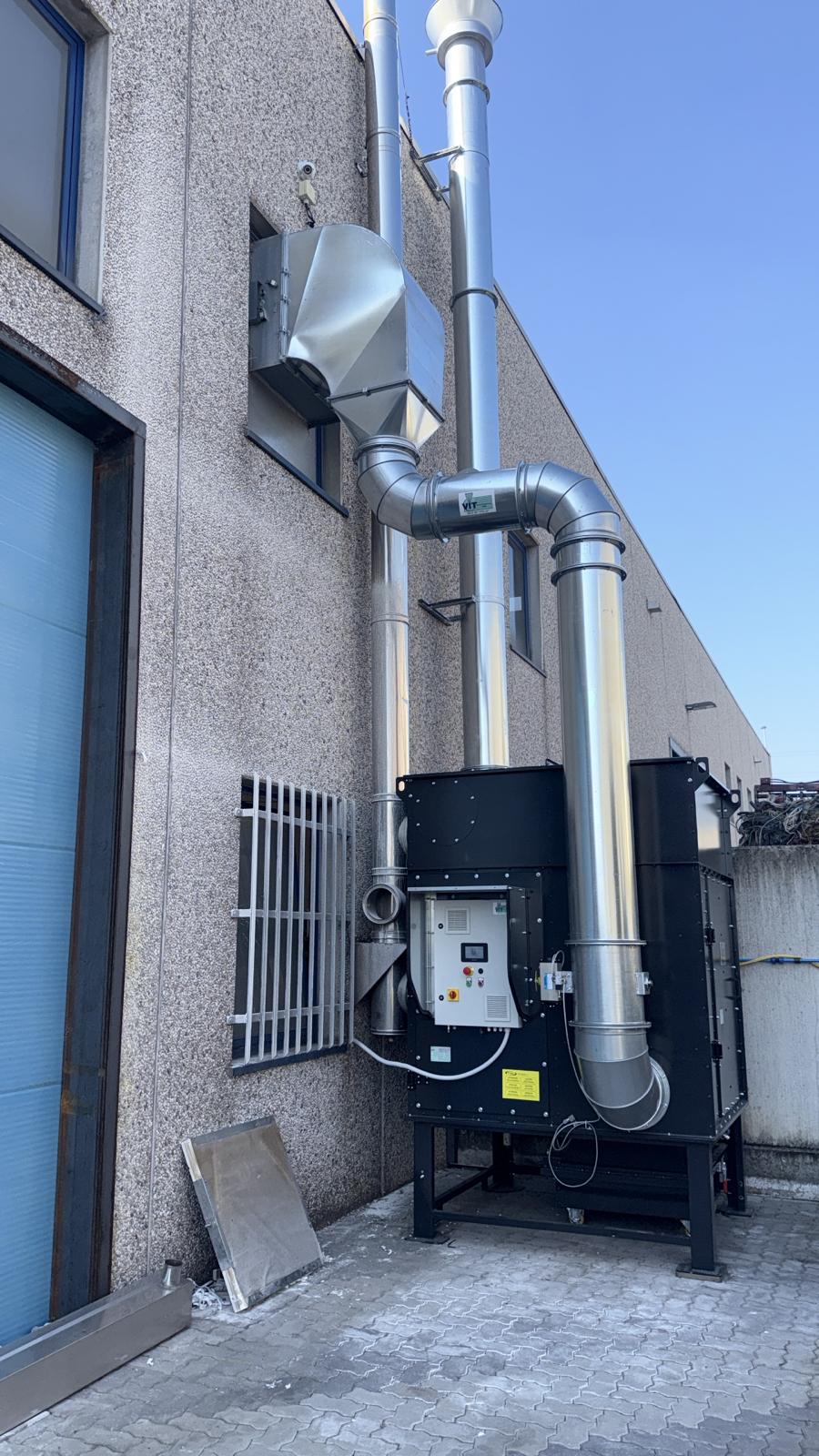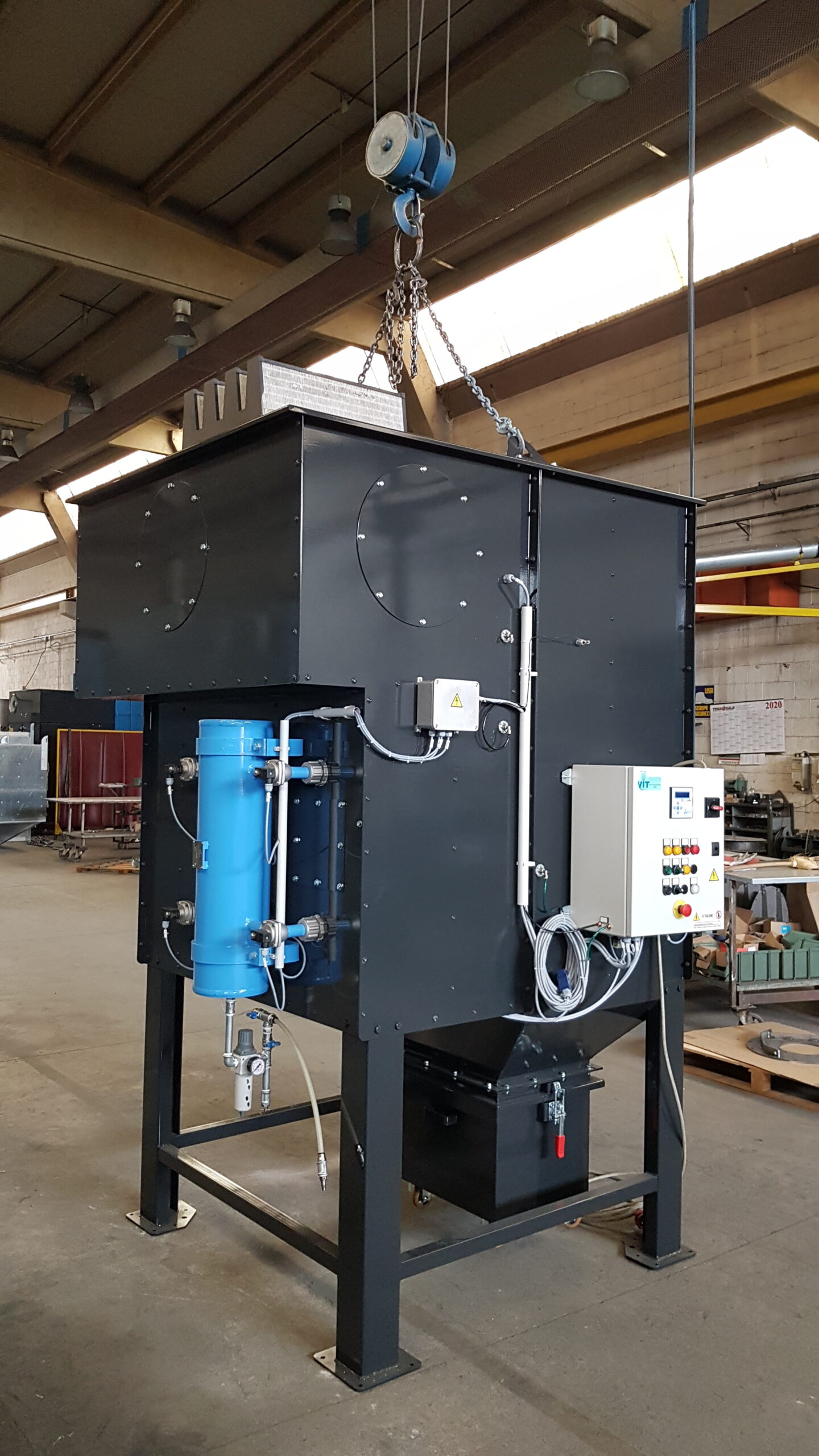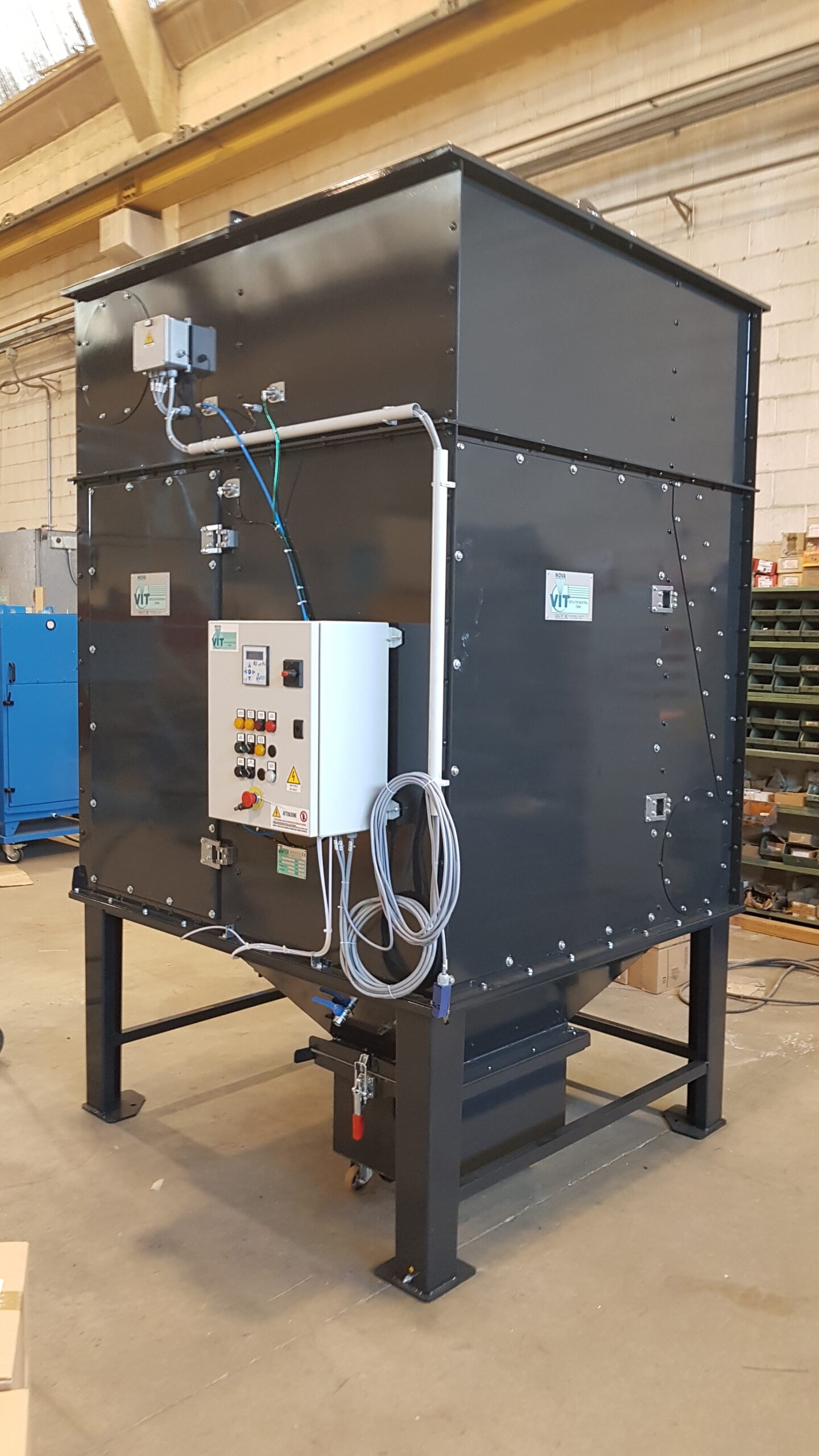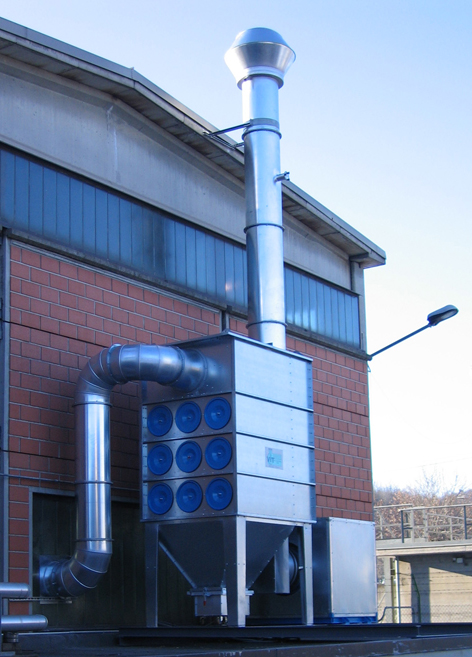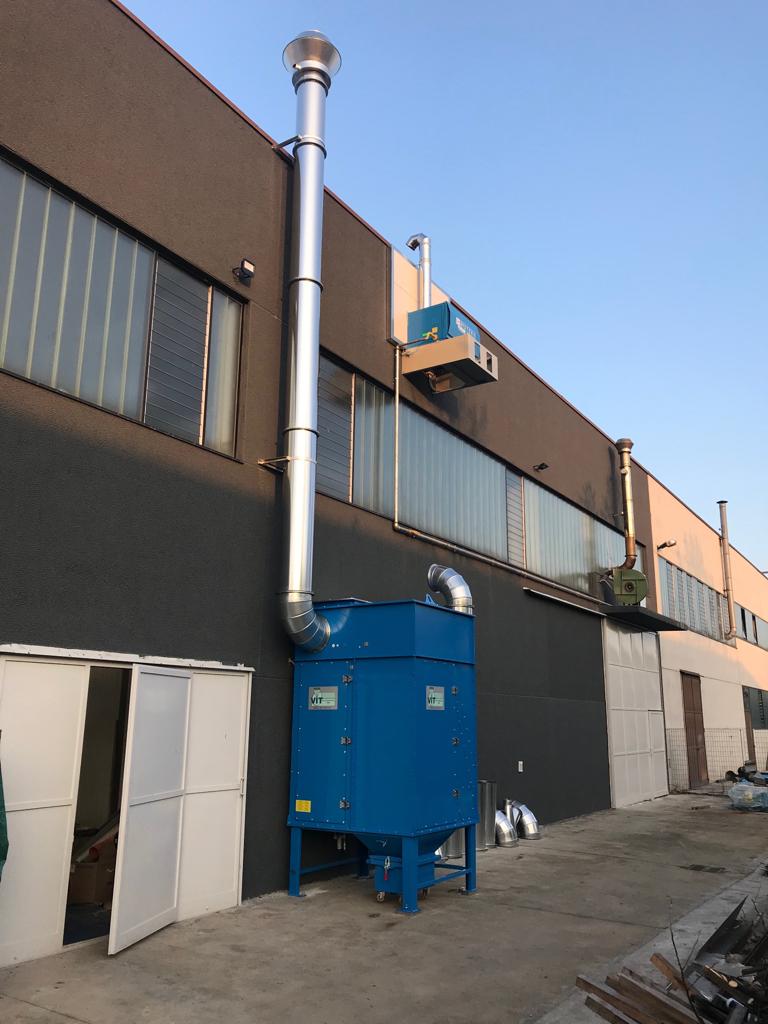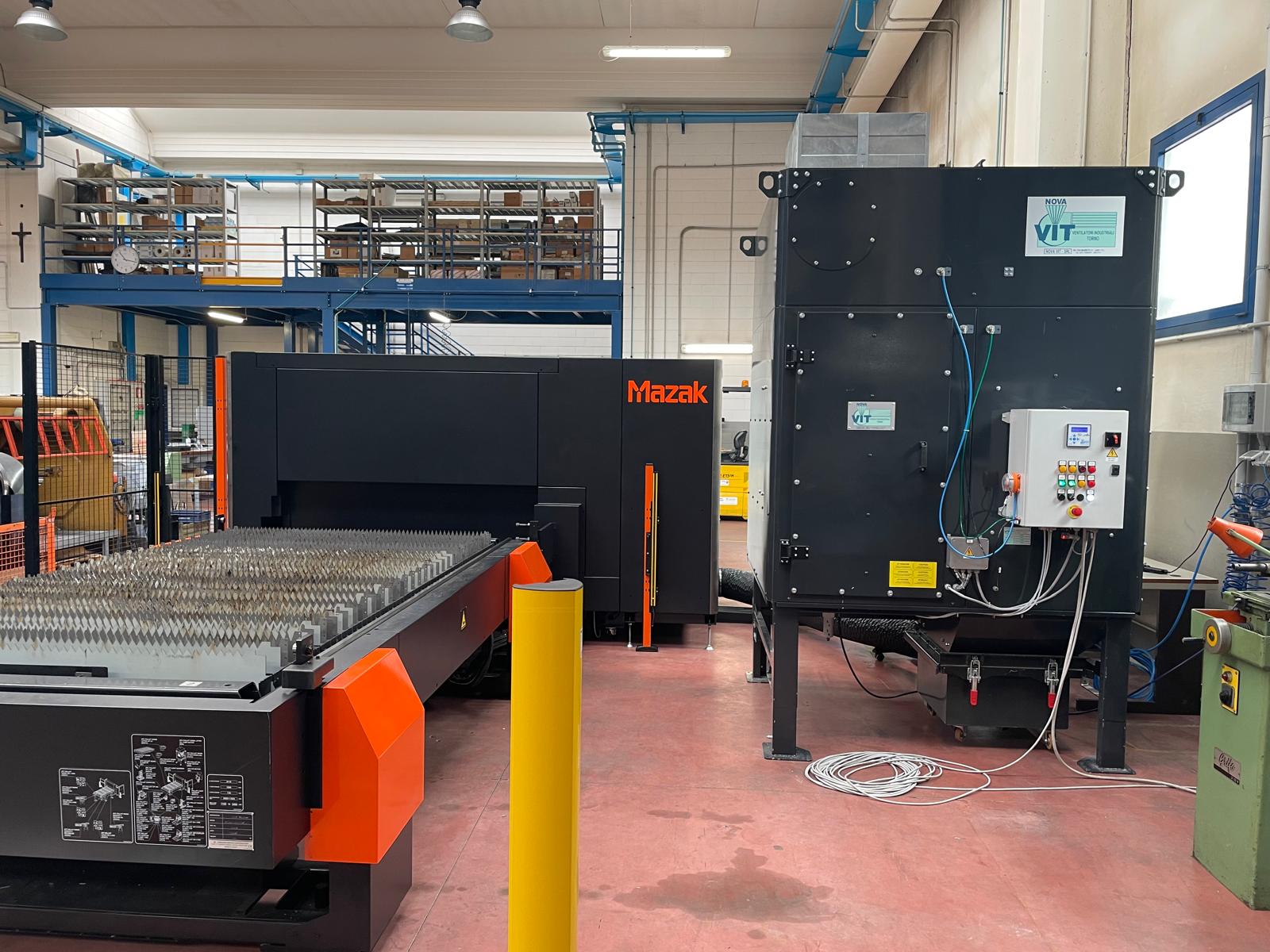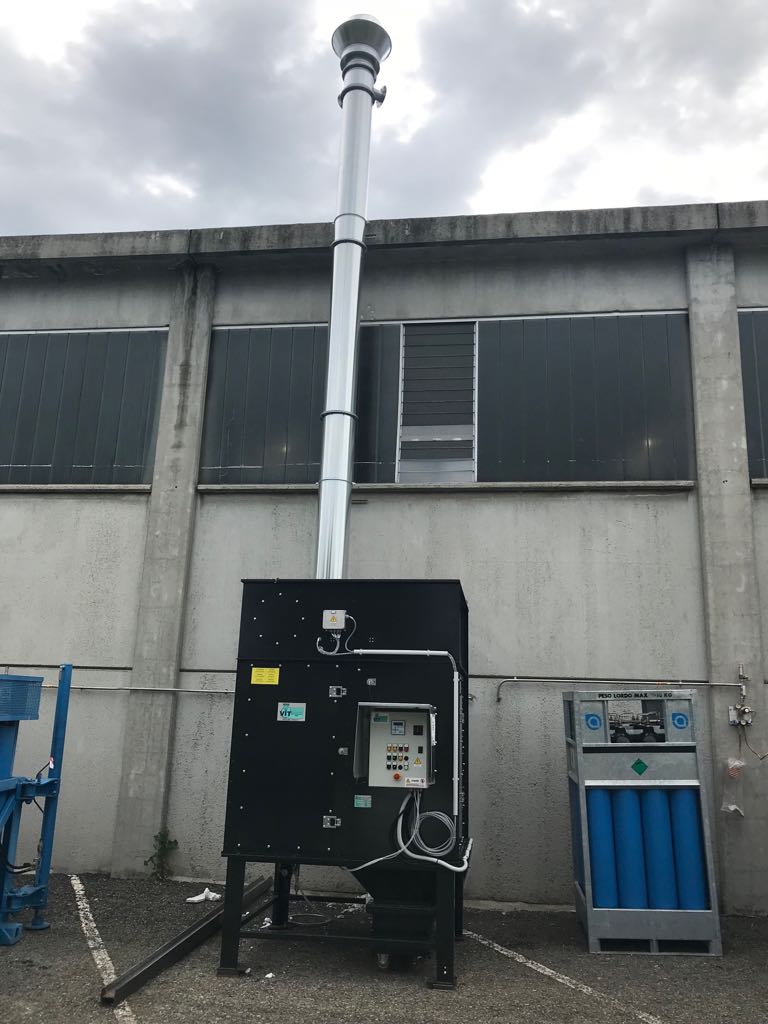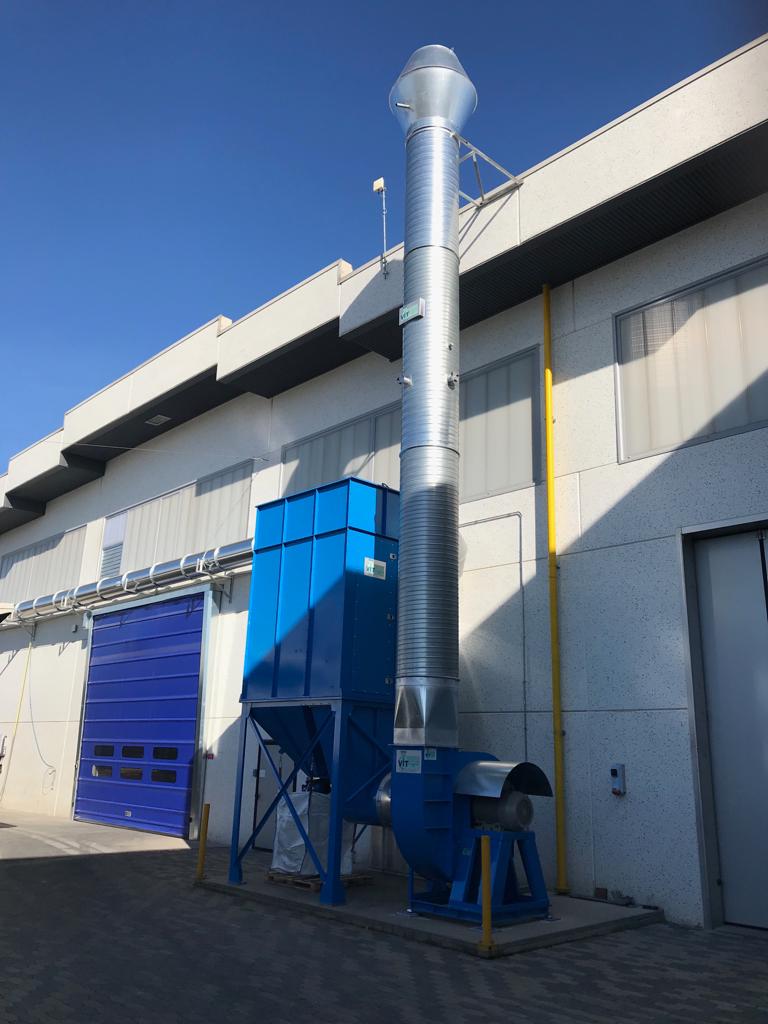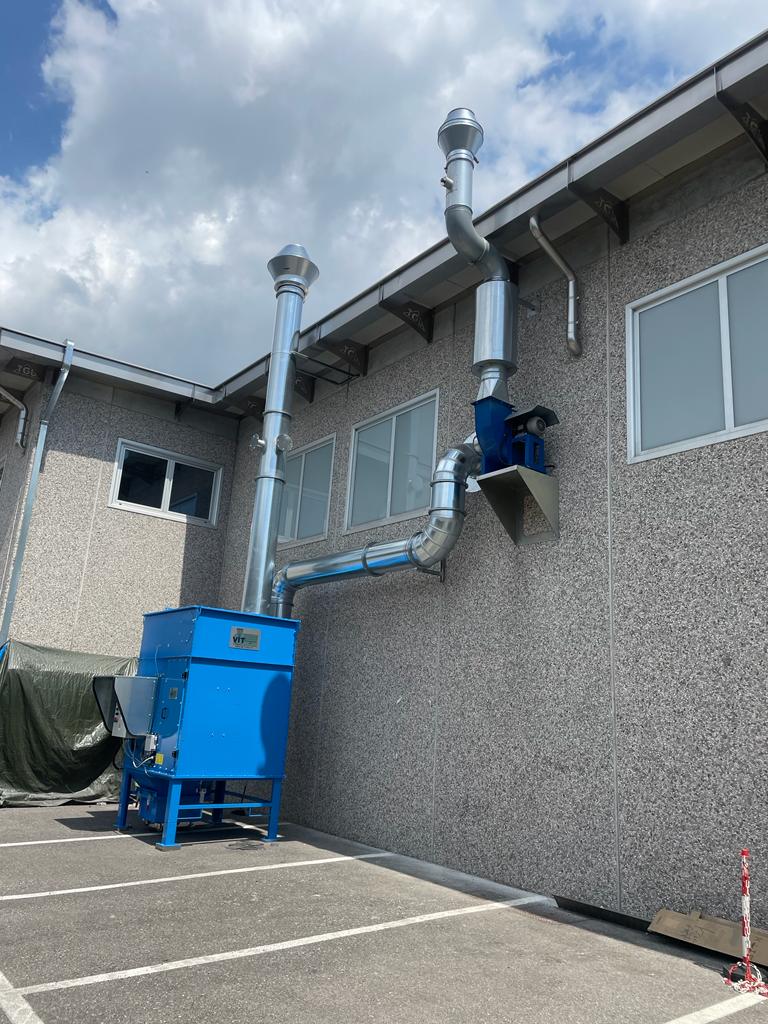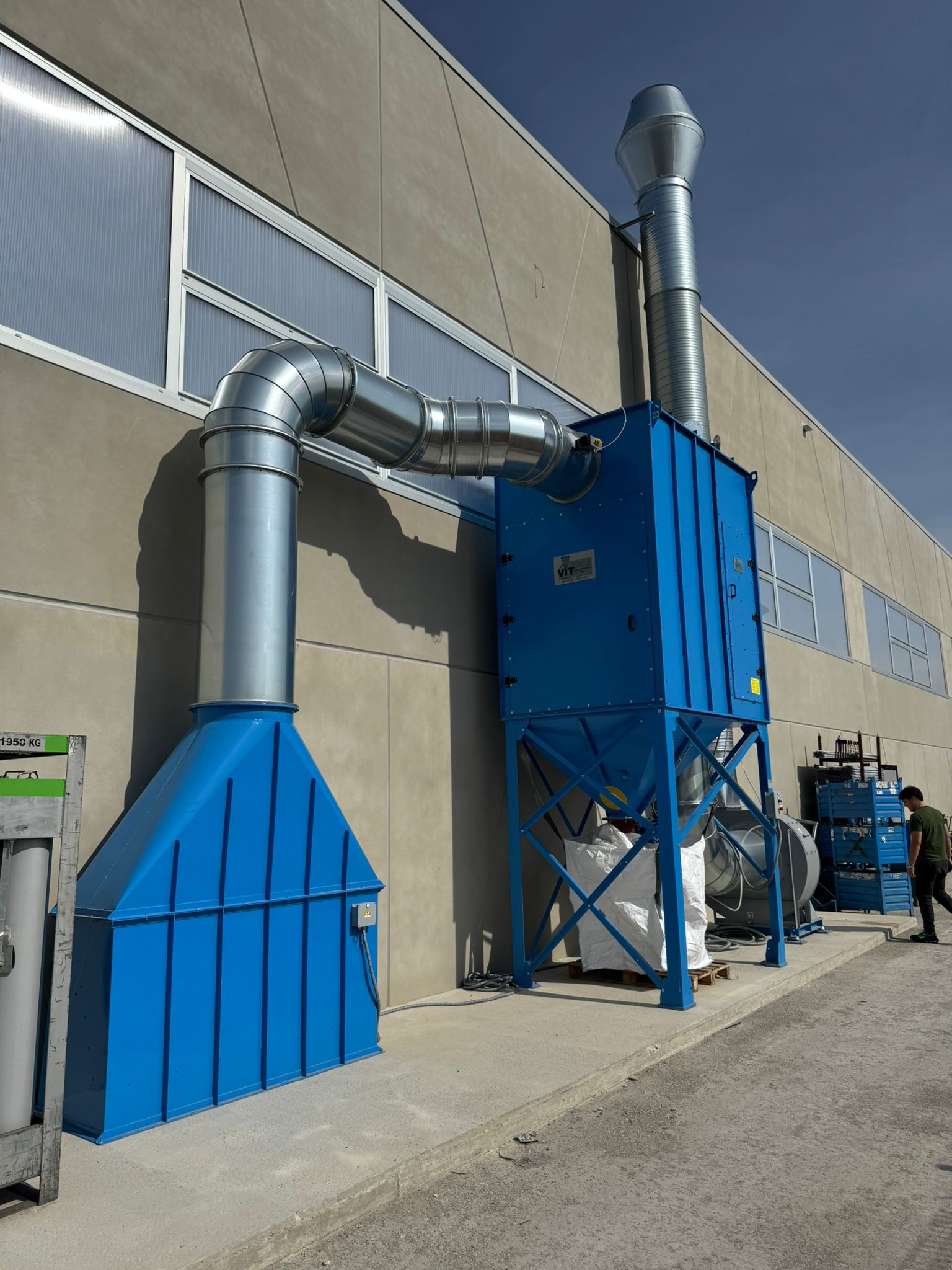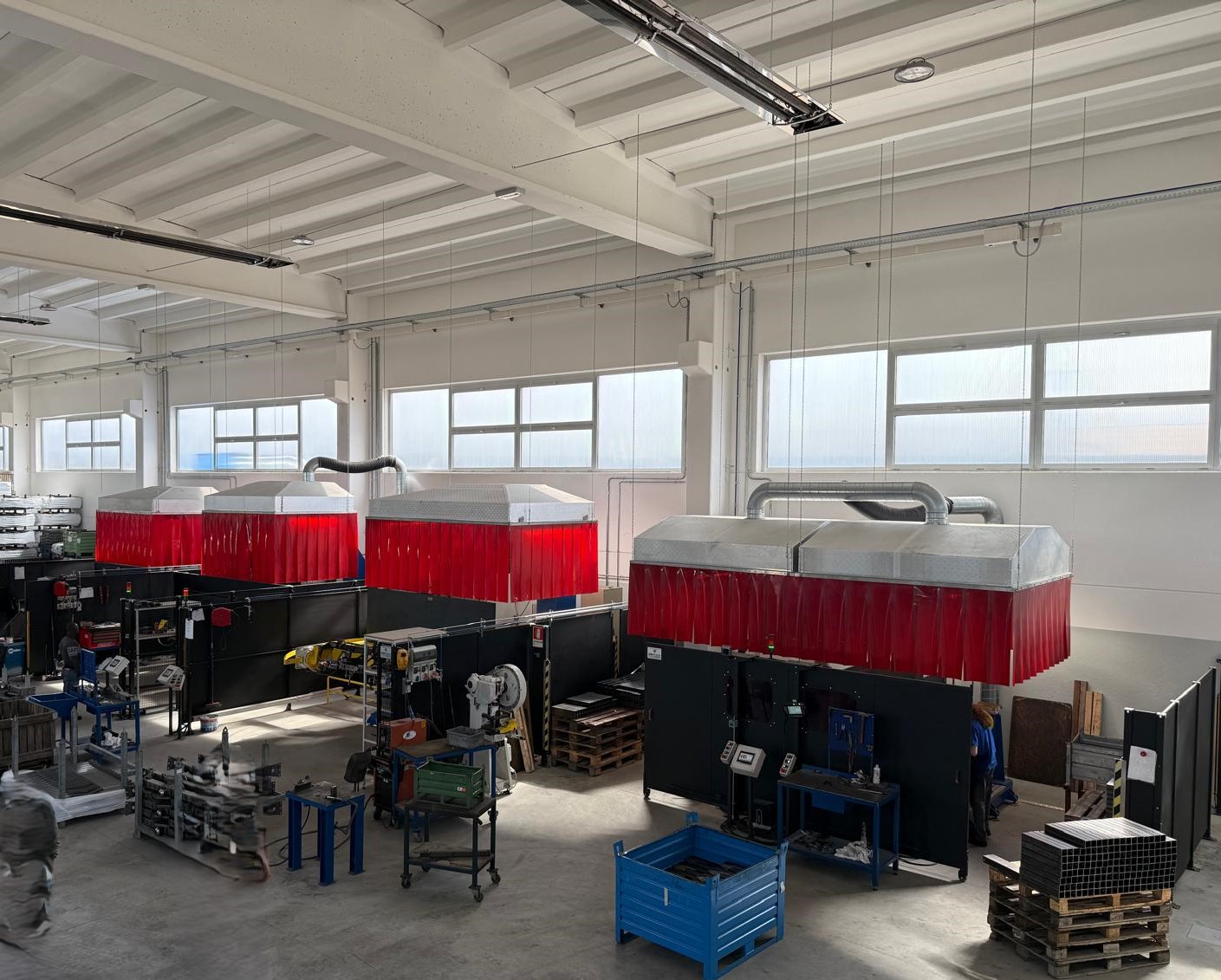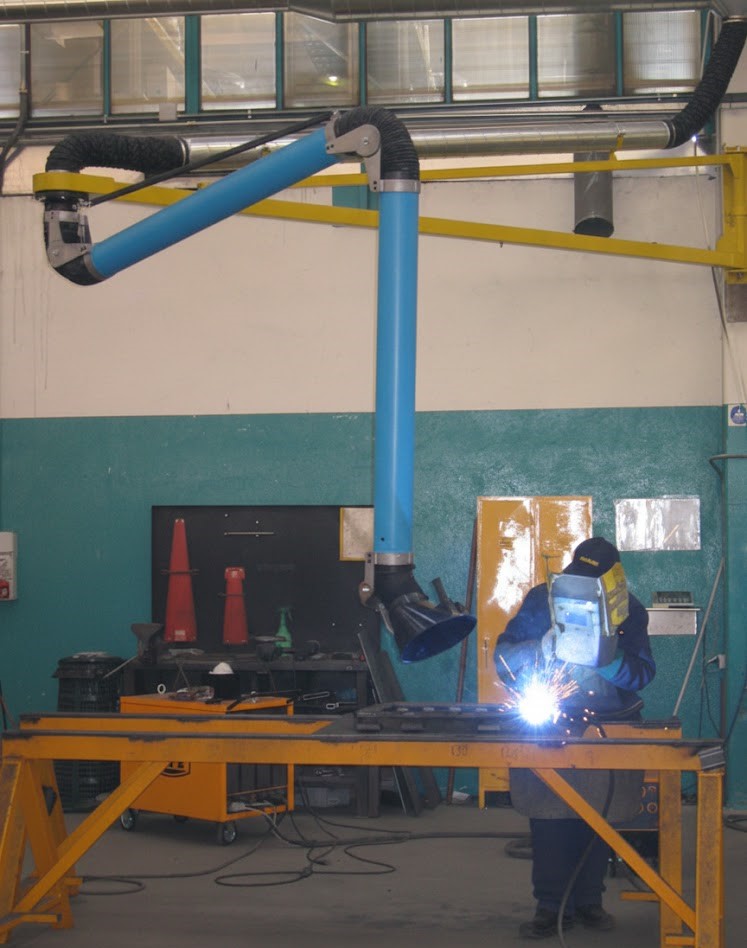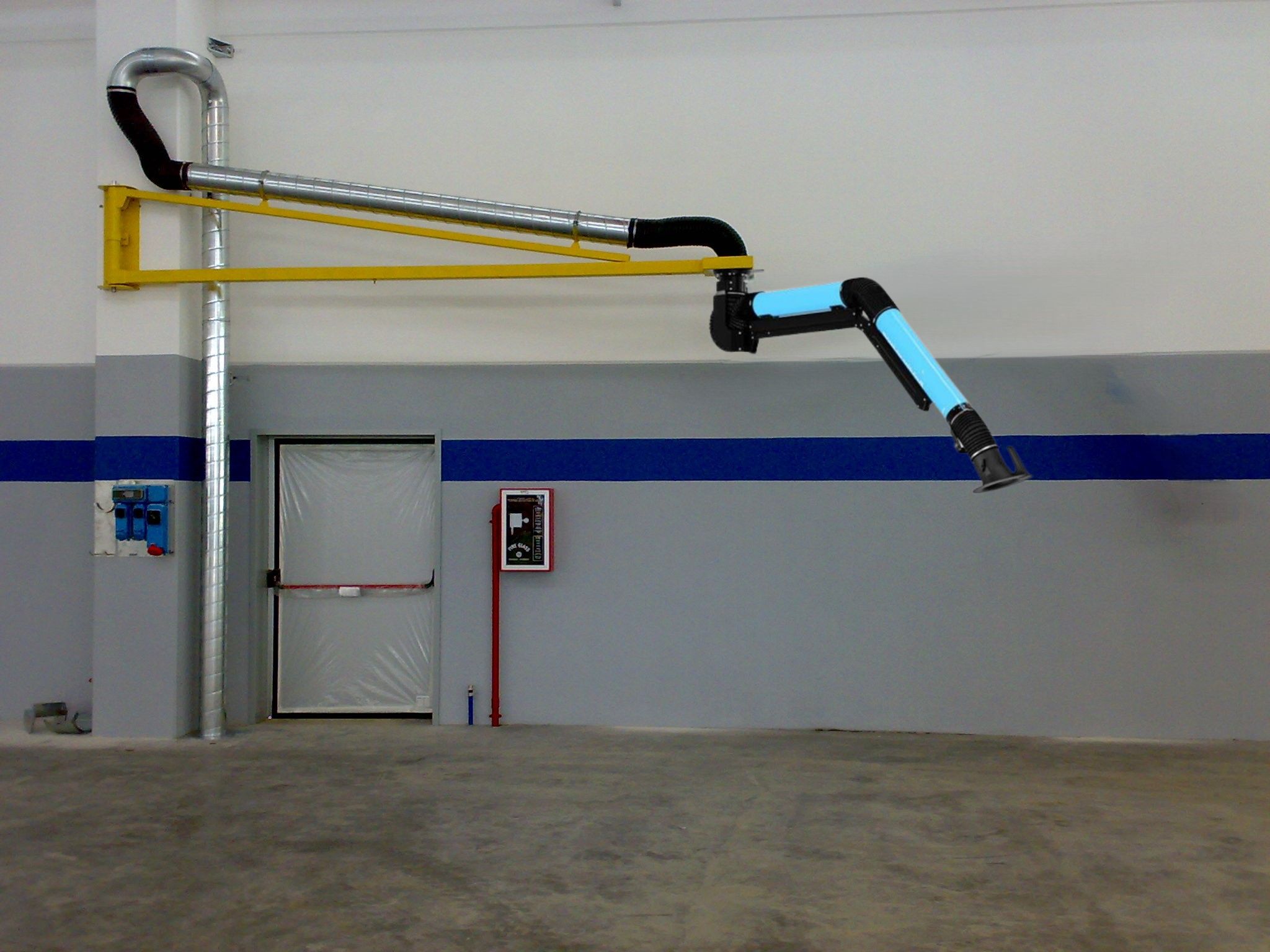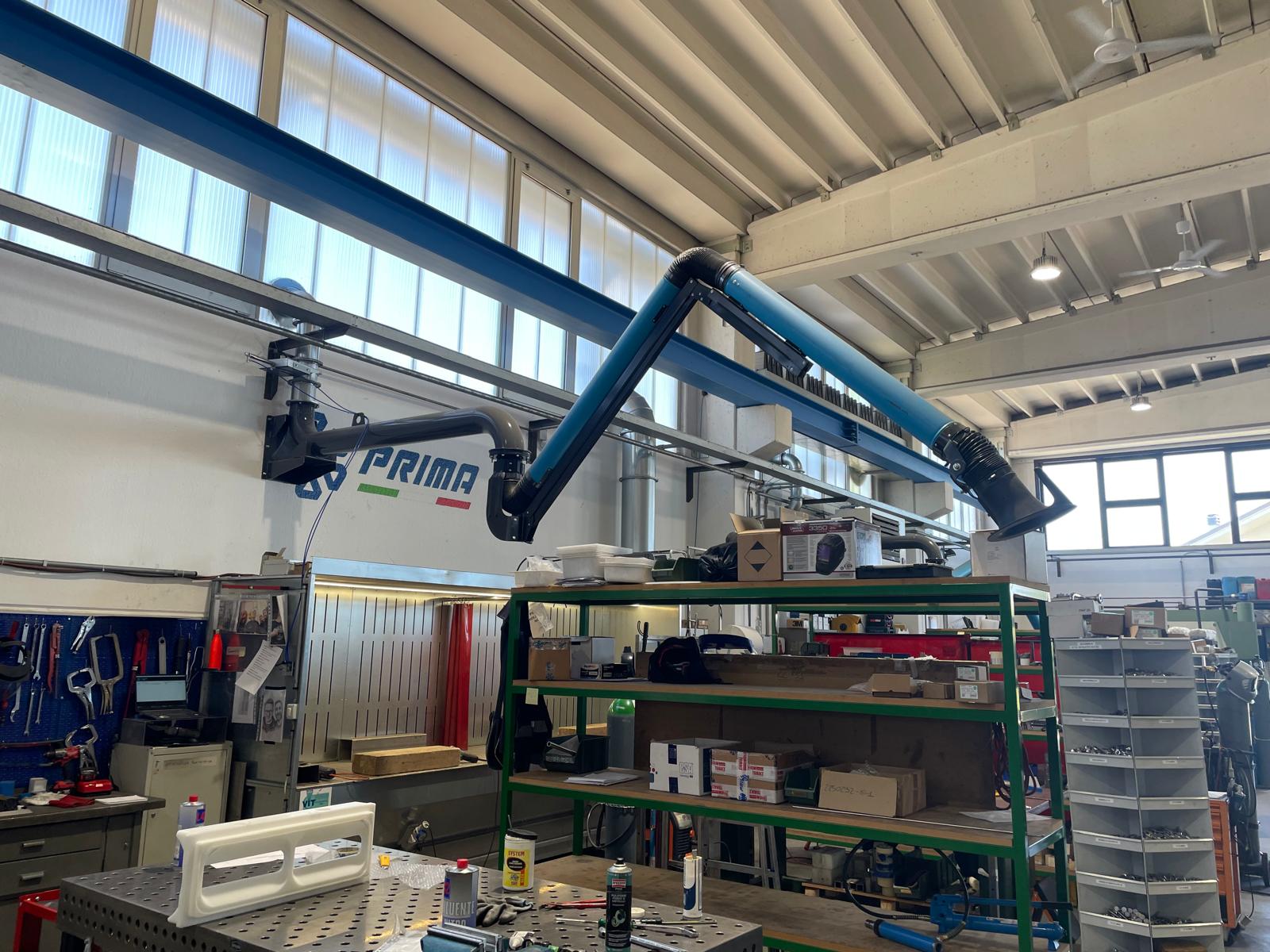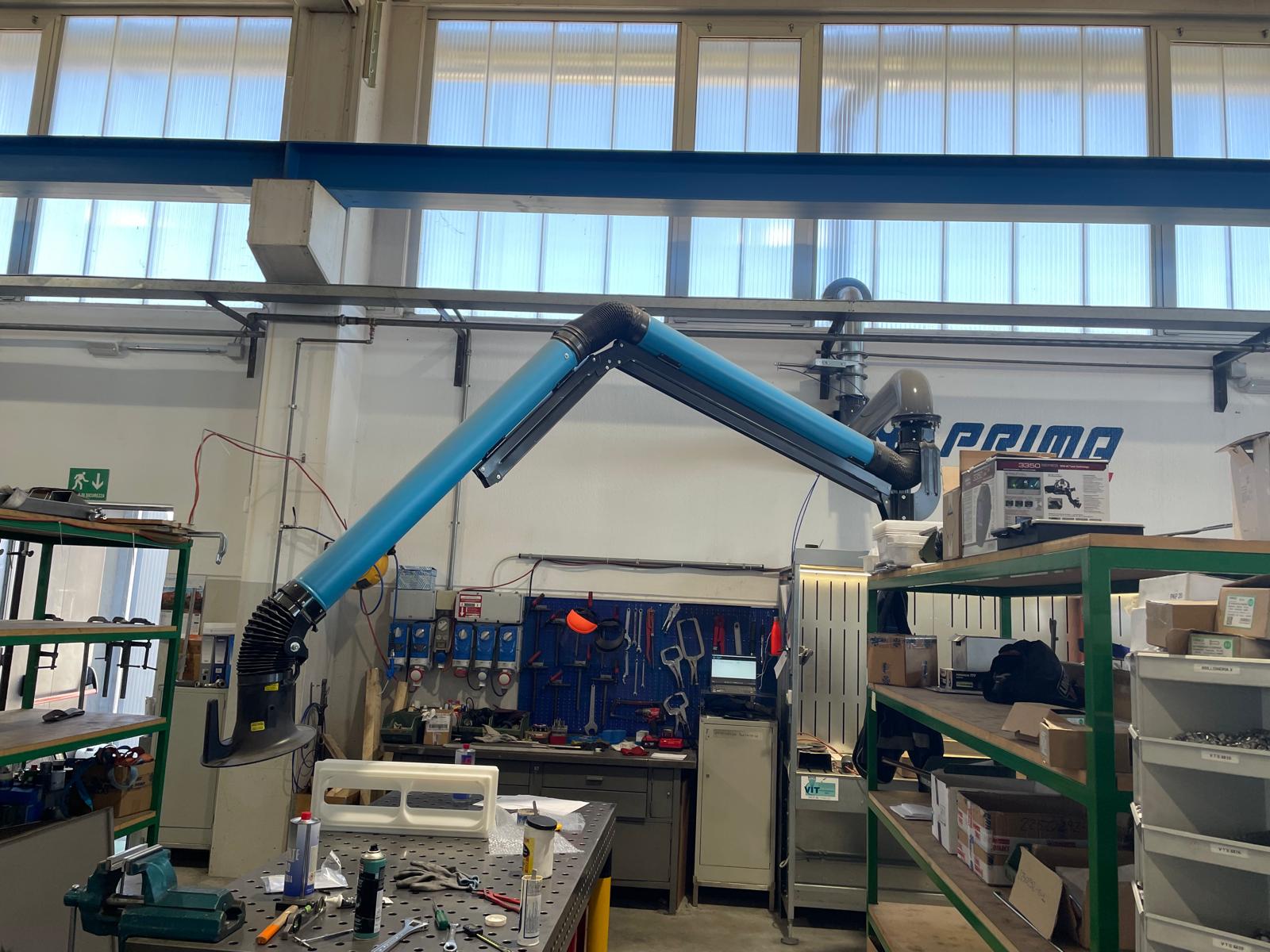
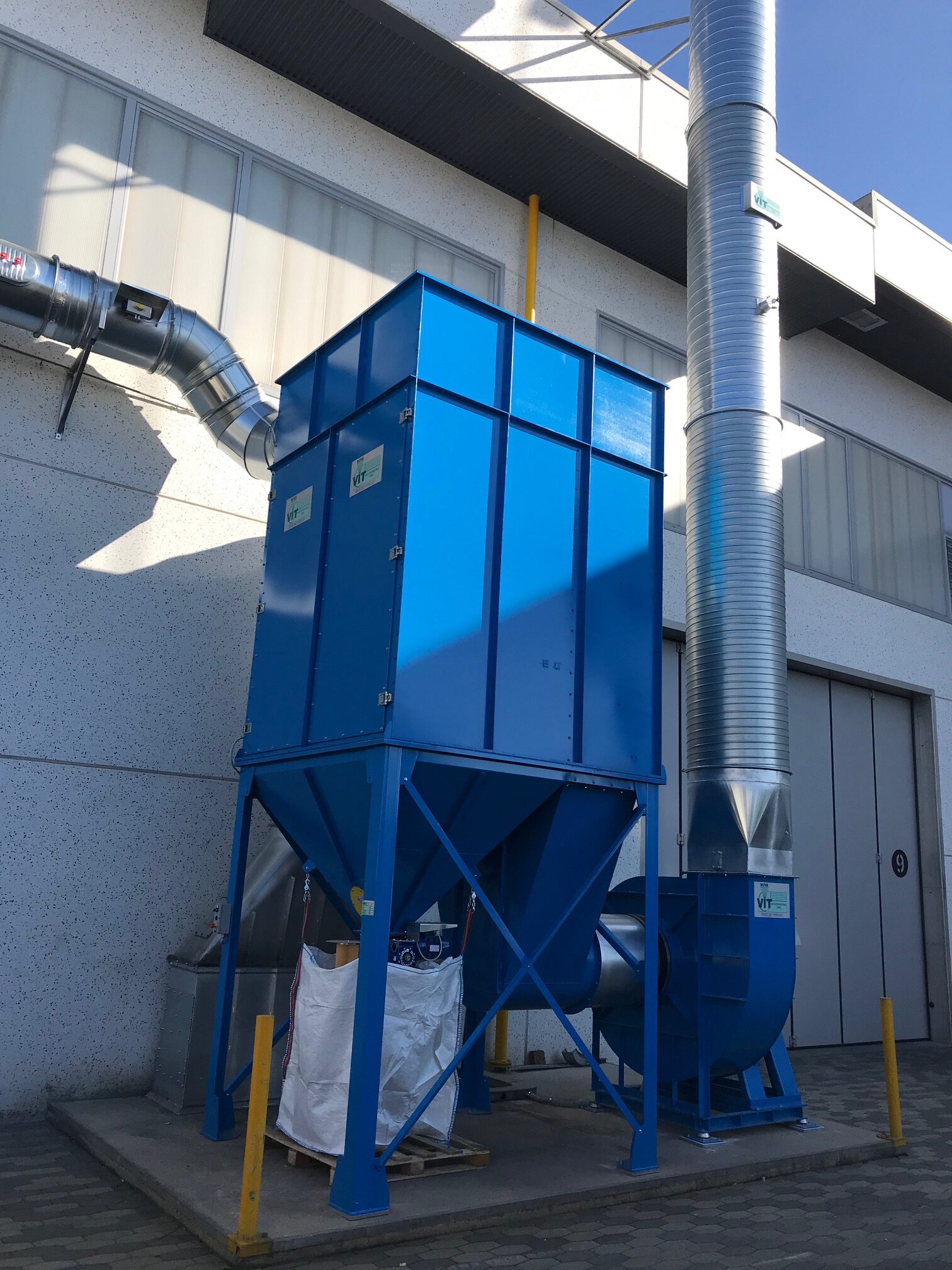
A solution designed for the extraction and filtration of fumes and dust generated during industrial welding processes. The system effectively reduces the dispersion of pollutants in the working environment, helping to improve air quality and overall operating conditions for personnel.
Equipped with a Pulse Jet cleaning system, it ensures continuous operation and consistent performance even under high particulate loads. The configuration is designed to integrate easily into existing production processes and is suitable for a wide range of industrial applications.
Ideal for: laminating and coating processes, welding, grinding, and related operations requiring effective control of fumes and dust.
The Welding fume and dust filter is suitable for welding applications where it is necessary to contain dust and fumes. The configuration can be adapted to a single workstation or integrated into an existing extraction system, helping to keep the working air more stable and controlled.
The Welding fume and dust filter is designed to capture dust and fumes using a pulse jet cleaning system, with selected filter elements to ensure operational continuity. The possible presence of multiple filtration stages is defined based on the particle size and concentration of the contaminants.
For the Welding fume and dust filter, sizing depends on capture distance, intake geometry, and system pressure losses. When available, the indicative range corresponds to the airflow required at the capture point; in any case, it is recommended to verify the data based on the actual emission point and operating conditions.
The Welding fume and dust filter requires periodic checks of filters, gaskets, and seals, as well as cleaning or replacement of the filter elements according to the workload. In versions equipped with self-cleaning systems, it is useful to monitor differential pressure and plan maintenance before performance decreases.
To properly integrate the Welding fume and dust filter, attention must be paid to positioning relative to the source, sealing of connections, and accessibility for inspection and maintenance. It is also important to verify compatibility with company safety procedures and with the characteristics of the treated contaminants.